FIND AN ANSWER
Frequently Asked Questions
Find answers to common questions about REVIVE, mangrove restoration, community participation, research activities, and equitable value chains in Malaysia.
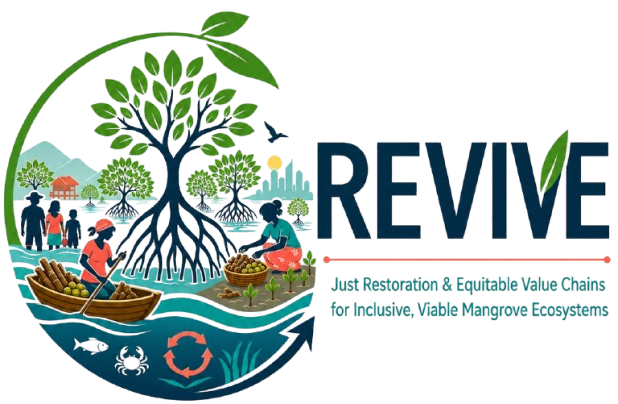
REVIVE is a research project focused on
developing evidence-based pathways for
just and sustainable mangrove restoration
and equitable value chains in Malaysia.
The project brings together researchers,
local partners, communities, and other
stakeholders to explore practical and
inclusive approaches to mangrove
restoration.
Mangroves provide important ecological,
social, and economic benefits. They can
help protect coastal areas from storms
and erosion, provide habitats for
biodiversity and fisheries, store carbon,
and support the livelihoods of coastal
communities.
Just restoration considers ecological
restoration together with the needs,
knowledge, rights, opportunities, and
livelihoods of people connected to
mangrove ecosystems. REVIVE explores
approaches that seek to balance
environmental outcomes with fair and
inclusive social and economic benefits.
REVIVE focuses on mangrove ecosystems
and related communities and value chains
in Malaysia. The project works with
research and delivery partners to develop
evidence and approaches that are relevant
to local environmental and social contexts.
REVIVE brings together researchers,
universities, local organisations,
community partners, and other
stakeholders. The project delivery
partnership includes The University of
Manchester and Malaysian research and
community partners, alongside academic
collaborators.
Community participation is an important
part of the project's approach. REVIVE
explores ways to incorporate local
knowledge, perspectives, experiences,
priorities, and participation into
restoration and value-chain activities.
Mangrove-related value chains involve the
activities through which resources,
products, services, knowledge, or benefits
move between communities, organisations,
markets, and other stakeholders.
REVIVE examines how these value chains can
create fairer opportunities and greater
benefits for communities while supporting
sustainable mangrove ecosystems.
Blue carbon refers to carbon captured and
stored by coastal and marine ecosystems,
including mangroves, seagrasses, and tidal
wetlands. REVIVE considers blue-carbon
modelling as part of its wider research
into mangrove restoration and sustainable
ecosystem management.
REVIVE uses a combination of research
approaches to understand ecological,
social, institutional, and economic
dimensions of mangrove restoration.
These may include field research,
community engagement, stakeholder
participation, modelling, interviews,
comparative analysis, and other
appropriate research methods.
You can explore the REVIVE website for
project updates, research outputs,
publications, news, and information about
project partners. For enquiries or
collaboration opportunities, please
contact the REVIVE project team through
the Contact Us page.
REVIVE
Partners & Sponsor